Precision Aspherical Lens Fabrication Technology and its Optical Application Value
2026-5-20
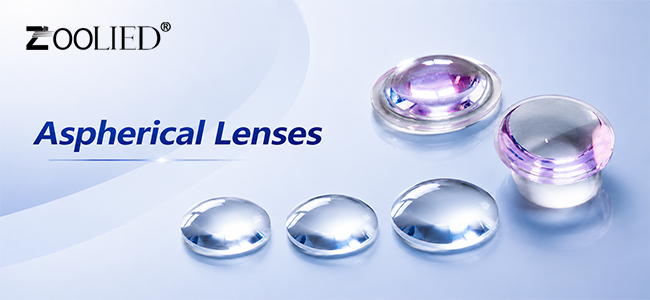
Compared to spherical lenses, aspherical lenses have a continuously and gradually changing curvature, which can correct various aberrations such as spherical aberration and coma at their source. They have the characteristics of single-lens replacement of multiple lenses, superior imaging quality, high light energy utilization, and lightweight system. They are widely applicable to high-end scenarios such as laser processing, medical optics, and aerospace, and are a key carrier for upgrading high-end optical systems.
I. Optical Advantages of Aspherical Lenses
Spherical lenses, limited by their inherent curvature, suffer from unavoidable spherical aberrations, requiring multiple lenses for correction, resulting in large optical systems and high losses. In contrast, aspherical lenses, with their specially designed curved surfaces, can achieve perfect focusing of light rays from both the center and edges, offering significant overall advantages.
In laser optical paths, aspherical lenses can focus micron-sized light spots with an energy distribution uniformity exceeding 95%, laying the foundation for precision laser processing.
II. Aspherical Surface Machining Technology System
Aspherical surfaces have no fixed curvature, and their precision manufacturing falls under the category of high-end optical ultra-precision machining. The core challenges are:
1. Stringent requirements for surface accuracy, needing to achieve nanometer-level precision of λ/10 to λ/30;
2. Surface roughness must be controlled to the sub-nanometer level, with no sub-surface machining damage.
Mainstream processing technology
Single-point diamond ultra-precision turning
Employing nanoscale diamond cutting tools and relying on ultra-precision machine tools to achieve nanoscale positioning, and through error prediction and compensation processes, it can be turned into shape in one step, with a surface accuracy of up to λ/10. It is suitable for rough machining of infrared materials, optical molds, and conventional glass aspherical surfaces.
Magnetorheological and Ion Beam Composite Polishing
Magnetorheological polishing rapidly corrects high-frequency errors in curved surfaces and improves contour accuracy; ion beam polishing removes minute amounts of material at the atomic level, eliminating surface scratches and subsurface damage, ultimately achieving an ultra-smooth surface with Ra≤1nm and a surface accuracy of λ/30, meeting the stringent requirements of high-end lasers and aerospace optics.
Precision glass molding mass production
To meet the large-scale demand of civilian optics, high-precision molds are used for high-temperature molding in one step, eliminating the need for complex subsequent polishing. The mass production yield exceeds 95%, significantly reducing manufacturing costs. This is the mainstream process for mass production of consumer-grade aspherical lenses.
Comprehensive Precision Inspection
Equipped with laser interferometers, profilometers, roughness testers, eccentricity detectors, and other equipment, we conduct 100% inspection of all parameters of lens surface shape, thickness, eccentricity, and surface quality to ensure consistent precision and environmental stability for batch products.
III. Application Value of Optical Paths
Laser Processing Applications
In 1064nm laser cutting and welding optical paths, the aspherical lens focuses the light spot into a small and uniform size, significantly improving weld quality and cutting accuracy; the high laser damage threshold allows for long-term stable operation of kilowatt-level high-power lasers, while simplifying the optical structure, making it widely used in precision machining scenarios for new energy vehicle batteries and motors.
Medical Optics Applications
It can correct aberrations in medical optical systems and is used in ophthalmic intraocular lenses, endoscopes, surgical microscopes, and other equipment. In minimally invasive procedures, it enables high-resolution imaging in small spaces, providing clear images and precise positioning, meeting the high safety and precision standards for medical equipment.
Imaging and Sensing Applications
Adaptable to fields such as LiDAR, machine vision, and security monitoring, it maintains high-definition imaging with a large field of view and effectively corrects field curvature distortion; it can compress the size of the optical module, improve the detection distance and recognition accuracy, and is a core optical component for autonomous driving and industrial vision perception.
Aerospace Applications
With its advantages of lightweight design, low aberrations, and high environmental stability, it is suitable for extreme working conditions such as satellite imaging and aerial reconnaissance; it reduces the number of lenses and the weight of the payload, and maintains stable optical performance in high and low temperature and vibration environments, thereby improving the overall reliability of the system.
IV. Technological Development Trends and Prospects
The future of aspherical surface processing will upgrade towards three major directions: ultra-precision machining of free-form surfaces, integrated composite processes, and intelligent manufacturing. Relying on technologies such as AI adaptive error compensation and deterministic ion beam shaping, processing accuracy and mass production efficiency will continue to improve.
Meanwhile, its application boundaries are constantly expanding, rapidly penetrating emerging fields such as AR/VR, quantum optics, biological gene sequencing, and automotive LiDAR, becoming an indispensable core component of optical systems in cutting-edge technology industries.
I. Optical Advantages of Aspherical Lenses
Spherical lenses, limited by their inherent curvature, suffer from unavoidable spherical aberrations, requiring multiple lenses for correction, resulting in large optical systems and high losses. In contrast, aspherical lenses, with their specially designed curved surfaces, can achieve perfect focusing of light rays from both the center and edges, offering significant overall advantages.
|
|
Spherical lens |
Aspherical lens |
Performance improvement |
|
Aberration control |
Inherent spherical aberration, relying on multi-element combination correction |
Single-chip aberration correction, simultaneous correction of coma and astigmatism |
Image quality has been greatly improved |
|
Photovoltaic utilization |
Low light transmission results in significant image quality degradation at small apertures |
High image quality is maintained even with a small aperture, and strong light transmission capability is achieved |
Energy efficiency improved by more than 20% |
|
Structural layout |
The lenses are numerous and the overall size and weight are relatively large |
Reduced to 2-3 lenses, with a compact structure |
System volume and weight reduced by 40%–60% |
|
Comprehensive cost |
Assembly and subsequent maintenance costs are relatively high |
Streamline the structure and reduce assembly losses |
Lifecycle costs decreased by 25%+ |
In laser optical paths, aspherical lenses can focus micron-sized light spots with an energy distribution uniformity exceeding 95%, laying the foundation for precision laser processing.
II. Aspherical Surface Machining Technology System
Aspherical surfaces have no fixed curvature, and their precision manufacturing falls under the category of high-end optical ultra-precision machining. The core challenges are:
1. Stringent requirements for surface accuracy, needing to achieve nanometer-level precision of λ/10 to λ/30;
2. Surface roughness must be controlled to the sub-nanometer level, with no sub-surface machining damage.
Mainstream processing technology
Single-point diamond ultra-precision turning
Employing nanoscale diamond cutting tools and relying on ultra-precision machine tools to achieve nanoscale positioning, and through error prediction and compensation processes, it can be turned into shape in one step, with a surface accuracy of up to λ/10. It is suitable for rough machining of infrared materials, optical molds, and conventional glass aspherical surfaces.
Magnetorheological and Ion Beam Composite Polishing
Magnetorheological polishing rapidly corrects high-frequency errors in curved surfaces and improves contour accuracy; ion beam polishing removes minute amounts of material at the atomic level, eliminating surface scratches and subsurface damage, ultimately achieving an ultra-smooth surface with Ra≤1nm and a surface accuracy of λ/30, meeting the stringent requirements of high-end lasers and aerospace optics.
Precision glass molding mass production
To meet the large-scale demand of civilian optics, high-precision molds are used for high-temperature molding in one step, eliminating the need for complex subsequent polishing. The mass production yield exceeds 95%, significantly reducing manufacturing costs. This is the mainstream process for mass production of consumer-grade aspherical lenses.
Comprehensive Precision Inspection
Equipped with laser interferometers, profilometers, roughness testers, eccentricity detectors, and other equipment, we conduct 100% inspection of all parameters of lens surface shape, thickness, eccentricity, and surface quality to ensure consistent precision and environmental stability for batch products.
III. Application Value of Optical Paths
Laser Processing Applications
In 1064nm laser cutting and welding optical paths, the aspherical lens focuses the light spot into a small and uniform size, significantly improving weld quality and cutting accuracy; the high laser damage threshold allows for long-term stable operation of kilowatt-level high-power lasers, while simplifying the optical structure, making it widely used in precision machining scenarios for new energy vehicle batteries and motors.
Medical Optics Applications
It can correct aberrations in medical optical systems and is used in ophthalmic intraocular lenses, endoscopes, surgical microscopes, and other equipment. In minimally invasive procedures, it enables high-resolution imaging in small spaces, providing clear images and precise positioning, meeting the high safety and precision standards for medical equipment.
Imaging and Sensing Applications
Adaptable to fields such as LiDAR, machine vision, and security monitoring, it maintains high-definition imaging with a large field of view and effectively corrects field curvature distortion; it can compress the size of the optical module, improve the detection distance and recognition accuracy, and is a core optical component for autonomous driving and industrial vision perception.
Aerospace Applications
With its advantages of lightweight design, low aberrations, and high environmental stability, it is suitable for extreme working conditions such as satellite imaging and aerial reconnaissance; it reduces the number of lenses and the weight of the payload, and maintains stable optical performance in high and low temperature and vibration environments, thereby improving the overall reliability of the system.
IV. Technological Development Trends and Prospects
The future of aspherical surface processing will upgrade towards three major directions: ultra-precision machining of free-form surfaces, integrated composite processes, and intelligent manufacturing. Relying on technologies such as AI adaptive error compensation and deterministic ion beam shaping, processing accuracy and mass production efficiency will continue to improve.
Meanwhile, its application boundaries are constantly expanding, rapidly penetrating emerging fields such as AR/VR, quantum optics, biological gene sequencing, and automotive LiDAR, becoming an indispensable core component of optical systems in cutting-edge technology industries.