Infrared Calcium Fluoride: The Key Crystal for Penetrating the “Infrared Window”
2026-1-15
In the fields of infrared detection, laser technology, and spectral analysis, a material's ability to transmit specific infrared wavelengths directly determines the performance limits of the system. Calcium fluoride crystals, with their unique physicochemical properties, have become an indispensable optical material in the mid-infrared region—particularly the 3-5 micron atmospheric window—underpinning numerous cutting-edge applications ranging from thermal imaging to high-energy lasers.
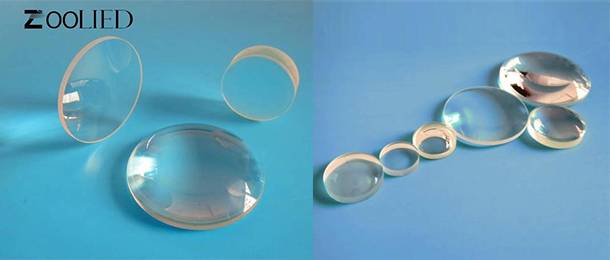
Exceptional Infrared Transmission Properties
Calcium fluoride's core advantage lies in its broad transmission range. It spans from the deep ultraviolet region at approximately 0.15 micrometers to the infrared region at around 9 micrometers, covering ultraviolet, visible light, and mid-infrared bands. Within the critical atmospheric window of 3-5 micrometers, it exhibits extremely high transmittance and minimal absorption loss. This characteristic makes it an ideal choice for manufacturing transmission components such as windows, lenses, and prisms in this wavelength band. Compared to alkali metal halide crystals, which are prone to deliquescence and have poor mechanical properties, calcium fluoride offers chemical stability, moderate hardness, and greater ease of processing and coating, significantly enhancing its practicality.
Core Application Scenarios
Thermal Imaging and Infrared Guidance Systems: The 3-5 micron band encompasses the primary thermal radiation energy of objects at ambient temperatures. Calcium fluoride optical components are widely used in high-performance thermal imagers, infrared search and track systems, and missile guidance heads as protective windows or lens assemblies. Its high transmittance directly enhances system detection sensitivity and operational range.
High-Energy Laser Systems: Calcium fluoride is one of the few infrared materials capable of withstanding high-power laser irradiation. It serves not only as the output window for CO₂ lasers but is also the preferred nonlinear crystal for mid-infrared optical parametric oscillators (OPOs). Through the OPO process, near-infrared lasers can be efficiently converted into 3-5 micron mid-infrared lasers, a wavelength band with unique applications in spectral detection, lidar, and medical surgery.
Fourier Transform Infrared Spectrometers: As the core beam splitter material in FT-IR spectrometers, calcium fluoride's broad spectral transmission and stability ensure high signal-to-noise ratio spectral data across wide wavelength ranges. It serves as the cornerstone for material analysis and environmental monitoring.
Challenges and Future Development
Despite its superior performance, calcium fluoride faces challenges in application. Its inherent brittleness and low thermal shock resistance limit its use under extreme thermal loads. Additionally, the technology for growing large-size crystals with high optical homogeneity is complex and costly.
Current research addressing these challenges focuses on optimizing crystal growth processes, developing novel composite materials, and designing high-performance anti-reflective coatings. With advancements in preparation techniques like chemical vapor deposition, calcium fluoride films or heterostructures hold promise for pioneering new applications in integrated photonics.
In summary, calcium fluoride crystals firmly occupy a central position in mid-infrared optical technology due to their unparalleled wide infrared transmission band, excellent laser tolerance, and superior stability. They are not only key to enhancing the performance of existing infrared systems but also serve as a vital material foundation for future mid-infrared optoelectronic technologies, including trace gas sensing, free-space communication, and next-generation laser weapon systems.
Calcium fluoride's core advantage lies in its broad transmission range. It spans from the deep ultraviolet region at approximately 0.15 micrometers to the infrared region at around 9 micrometers, covering ultraviolet, visible light, and mid-infrared bands. Within the critical atmospheric window of 3-5 micrometers, it exhibits extremely high transmittance and minimal absorption loss. This characteristic makes it an ideal choice for manufacturing transmission components such as windows, lenses, and prisms in this wavelength band. Compared to alkali metal halide crystals, which are prone to deliquescence and have poor mechanical properties, calcium fluoride offers chemical stability, moderate hardness, and greater ease of processing and coating, significantly enhancing its practicality.
Core Application Scenarios
Thermal Imaging and Infrared Guidance Systems: The 3-5 micron band encompasses the primary thermal radiation energy of objects at ambient temperatures. Calcium fluoride optical components are widely used in high-performance thermal imagers, infrared search and track systems, and missile guidance heads as protective windows or lens assemblies. Its high transmittance directly enhances system detection sensitivity and operational range.
High-Energy Laser Systems: Calcium fluoride is one of the few infrared materials capable of withstanding high-power laser irradiation. It serves not only as the output window for CO₂ lasers but is also the preferred nonlinear crystal for mid-infrared optical parametric oscillators (OPOs). Through the OPO process, near-infrared lasers can be efficiently converted into 3-5 micron mid-infrared lasers, a wavelength band with unique applications in spectral detection, lidar, and medical surgery.
Fourier Transform Infrared Spectrometers: As the core beam splitter material in FT-IR spectrometers, calcium fluoride's broad spectral transmission and stability ensure high signal-to-noise ratio spectral data across wide wavelength ranges. It serves as the cornerstone for material analysis and environmental monitoring.
Challenges and Future Development
Despite its superior performance, calcium fluoride faces challenges in application. Its inherent brittleness and low thermal shock resistance limit its use under extreme thermal loads. Additionally, the technology for growing large-size crystals with high optical homogeneity is complex and costly.
Current research addressing these challenges focuses on optimizing crystal growth processes, developing novel composite materials, and designing high-performance anti-reflective coatings. With advancements in preparation techniques like chemical vapor deposition, calcium fluoride films or heterostructures hold promise for pioneering new applications in integrated photonics.
In summary, calcium fluoride crystals firmly occupy a central position in mid-infrared optical technology due to their unparalleled wide infrared transmission band, excellent laser tolerance, and superior stability. They are not only key to enhancing the performance of existing infrared systems but also serve as a vital material foundation for future mid-infrared optoelectronic technologies, including trace gas sensing, free-space communication, and next-generation laser weapon systems.