Analysis of Infrared Calcium Fluoride Lens Technology
2025-12-17
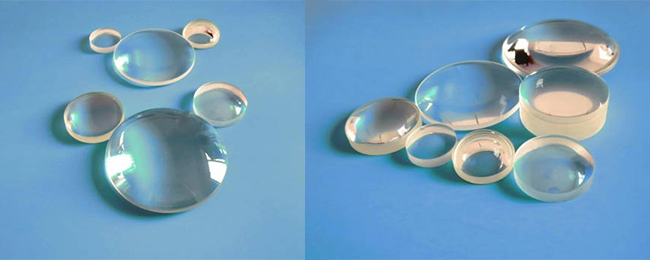
In the field of infrared optics, calcium fluoride (CaF₂) lenses have become indispensable core components in mid-to-long-wave infrared systems due to their exceptional material properties. Crafted from high-purity single-crystal material, these optical lenses function as crystalline eyes capable of clearly “seeing” thermal radiation, playing an irreplaceable role across numerous high-tech domains.
Material Principles and Unique Advantages
The core advantage of calcium fluoride crystals lies in their broad infrared transmission band (0.13μm to 10μm) and exceptionally low refractive index temperature coefficient. Compared to commonly used infrared materials such as germanium and silicon, CaF₂ exhibits exceptionally high transmittance (typically exceeding 90%) across the 0.2μm to 7μm range, coupled with minimal refractive index variation with temperature, conferring outstanding thermal stability to systems. Furthermore, CaF₂ possesses extremely low self-radiation characteristics, an outstanding laser damage threshold, and excellent chemical stability, enabling it to maintain reliable performance in demanding environments. Its low dispersion properties also ensure exceptional performance across broad spectral applications.
Key Application Areas
High-end thermal imaging and detection systems: In military reconnaissance, security surveillance, and industrial temperature measurement, CaF₂ lenses serve as core components of high-performance thermal imagers. Their high transmittance ensures exceptional transmission efficiency for mid-wave infrared (MWIR, 3–5μm) signals, significantly enhancing thermal imaging sensitivity and clarity. This enables precise detection of temperature differentials, identification of camouflaged targets, or monitoring of equipment overheating.
Fourier Transform Infrared (FTIR) Spectrometers: As critical tools for laboratory and online analysis, FTIR spectrometers require lenses with uniform, high transmittance across broad infrared spectra. CaF₂ lenses are ideal for sample cells, interferometers, and detector optical paths, finding extensive use in chemical analysis, pharmaceutical process monitoring, gas detection, and materials science research.
High-Power Laser Optics: Owing to its minimal absorption and exceptional damage resistance across common laser wavelengths—such as the 3–4μm mid-infrared range for hydrogen fluoride/deuterium lasers—CaF₂ is extensively employed in high-power laser output windows, focusing lenses, and beam delivery systems. It effectively mitigates thermal lensing effects, ensuring laser system stability and operational safety.
Astronomical observation and space optics: Space telescopes and infrared astronomical instruments must withstand extreme temperature fluctuations. CaF₂'s exceptionally low thermal-optical coefficient makes it the material of choice for manufacturing lenses in space-based infrared cameras and spectrometers, ensuring imaging quality remains unaffected by temperature variations during orbital operation.
Manufacturing and Challenges
The production of high-quality infrared calcium fluoride lenses exemplifies precision optical engineering. From the growth of large-sized, highly uniform single crystals to specialised diamond turning and polishing processes tailored for this soft material (Mohs hardness 4), each step demands exceptional precision. Advanced anti-reflective coating technology further extends performance across different spectral bands while enhancing environmental durability.
As infrared technology expands into emerging fields such as autonomous driving, environmental remote sensing, and biomedical imaging, demands for lightweight, highly stable infrared optical systems with broad spectral performance continue to rise. Infrared calcium fluoride lenses, with their comprehensive performance advantages, continue to broaden humanity's perception of the world. They transform the invisible infrared realm into clear, reliable information and imagery, serving as the pivotal ‘crystalline eye’ for exploring the unknown, safeguarding security, and driving innovation.
The core advantage of calcium fluoride crystals lies in their broad infrared transmission band (0.13μm to 10μm) and exceptionally low refractive index temperature coefficient. Compared to commonly used infrared materials such as germanium and silicon, CaF₂ exhibits exceptionally high transmittance (typically exceeding 90%) across the 0.2μm to 7μm range, coupled with minimal refractive index variation with temperature, conferring outstanding thermal stability to systems. Furthermore, CaF₂ possesses extremely low self-radiation characteristics, an outstanding laser damage threshold, and excellent chemical stability, enabling it to maintain reliable performance in demanding environments. Its low dispersion properties also ensure exceptional performance across broad spectral applications.
Key Application Areas
High-end thermal imaging and detection systems: In military reconnaissance, security surveillance, and industrial temperature measurement, CaF₂ lenses serve as core components of high-performance thermal imagers. Their high transmittance ensures exceptional transmission efficiency for mid-wave infrared (MWIR, 3–5μm) signals, significantly enhancing thermal imaging sensitivity and clarity. This enables precise detection of temperature differentials, identification of camouflaged targets, or monitoring of equipment overheating.
Fourier Transform Infrared (FTIR) Spectrometers: As critical tools for laboratory and online analysis, FTIR spectrometers require lenses with uniform, high transmittance across broad infrared spectra. CaF₂ lenses are ideal for sample cells, interferometers, and detector optical paths, finding extensive use in chemical analysis, pharmaceutical process monitoring, gas detection, and materials science research.
High-Power Laser Optics: Owing to its minimal absorption and exceptional damage resistance across common laser wavelengths—such as the 3–4μm mid-infrared range for hydrogen fluoride/deuterium lasers—CaF₂ is extensively employed in high-power laser output windows, focusing lenses, and beam delivery systems. It effectively mitigates thermal lensing effects, ensuring laser system stability and operational safety.
Astronomical observation and space optics: Space telescopes and infrared astronomical instruments must withstand extreme temperature fluctuations. CaF₂'s exceptionally low thermal-optical coefficient makes it the material of choice for manufacturing lenses in space-based infrared cameras and spectrometers, ensuring imaging quality remains unaffected by temperature variations during orbital operation.
Manufacturing and Challenges
The production of high-quality infrared calcium fluoride lenses exemplifies precision optical engineering. From the growth of large-sized, highly uniform single crystals to specialised diamond turning and polishing processes tailored for this soft material (Mohs hardness 4), each step demands exceptional precision. Advanced anti-reflective coating technology further extends performance across different spectral bands while enhancing environmental durability.
As infrared technology expands into emerging fields such as autonomous driving, environmental remote sensing, and biomedical imaging, demands for lightweight, highly stable infrared optical systems with broad spectral performance continue to rise. Infrared calcium fluoride lenses, with their comprehensive performance advantages, continue to broaden humanity's perception of the world. They transform the invisible infrared realm into clear, reliable information and imagery, serving as the pivotal ‘crystalline eye’ for exploring the unknown, safeguarding security, and driving innovation.