Comparison of BK7 Ball Lens and half Ball Lens Technologies
2026-4-8
Both BK7 Ball Lens and half Ball Lens are manufactured from optical-grade BK7 borosilicate glass, which is precision-ground and polished to shape; they serve as core components for controlling light paths in micro-optical systems. Although both rely on the same high-quality substrate and offer high light transmittance, excellent physical and chemical stability, and good machinability, they differ significantly in terms of structural design, optical performance, assembly requirements and applications. Therefore, selection must be made based on the specific requirements of the optical system.
 A comparison of the two in various respects:
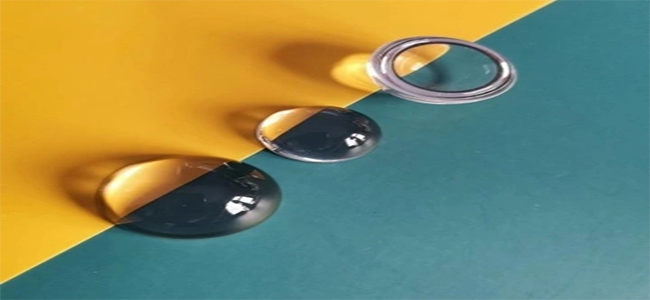
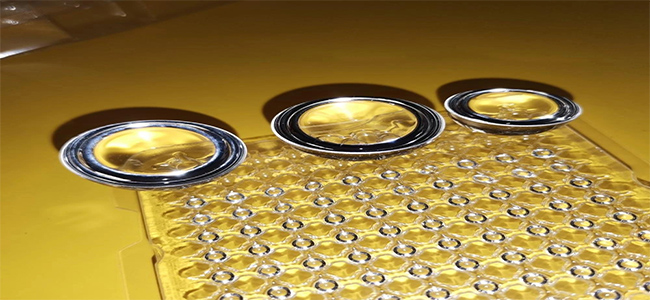
Differences in structure and design: The BK7 Ball Lens features a fully spherical structure, with both surfaces being standard convex spherical surfaces. Its compact overall volume maximises space utilisation, making it suitable for optical modules of extremely small dimensions; In contrast, the BK7 half Ball Lens is created by cutting a complete sphere along its diameter, resulting in a structure comprising one flat surface and one convex spherical surface. The flat end allows for direct, precise positioning without the need for additional positioning mechanisms, offering greater spatial advantages in flat-profile optical equipment.
Differences in optical performance: As both surfaces of a spherical lens are convex, it has a shorter focal length and outstanding focusing capability, resulting in higher coupling efficiency between optical fibres and lasers. It can effectively converge the beam to form a tiny spot, thereby increasing energy density. However, its spherical aberration is relatively pronounced, the monochromatic focused spot is slightly larger, and both surfaces require anti-reflection coating, leading to relatively high reflection losses. Hemisphere lenses, on the other hand, utilise a combination of a flat surface and a convex spherical surface, resulting in lower spherical aberration, a more regular focal spot and superior imaging quality. Furthermore, as anti-reflection coating is required only on the convex spherical surface, whilst the flat end can be directly bonded to other components, overall light transmission loss is lower. However, their focusing capability and coupling efficiency are slightly inferior to those of small ball lenses; they have a relatively longer focal length, and the focal point is situated further away from the lens surface.
Differences in assembly and bonding compatibility: Ball lenses impose extremely high demands on concentricity and angular alignment during assembly, making them somewhat more difficult to mount and align. Furthermore, positioning them when bonding them to other optical components is complex, which is not conducive to mass production; in contrast, the flat end of a half ball lens facilitates positioning and bonding, resulting in simpler assembly and greater stability. They are particularly well-suited for forming optical assemblies with other lenses, effectively eliminating chromatic aberration and enhancing the imaging accuracy of the system, thereby meeting the requirements of mass production.
Differences in application scenarios: Ball lenses, with their high coupling efficiency and extremely compact design, are primarily used in scenarios with stringent requirements for energy concentration and spatial dimensions, such as fibre coupling, miniature laser modules and highly integrated optical paths; Half ball lenses, on the other hand, are characterised by their ease of assembly, moderate working distance and excellent imaging quality, making them more suitable for applications such as endoscopes, optoelectronic sensors, optically bonded assemblies and standard laser collimation and focusing, and are particularly well-suited to flat optical equipment.
Summary:
Zoolied's BK7 ball and half ball lenses leverage the superior properties of BK7 glass, combined with the company’s proven precision machining and coating technologies, to play a vital role in micro-optical systems. With its diversified production capabilities, customised service advantages and stringent quality control, the company is able to provide clients with precise product selection advice and bespoke solutions tailored to their optical path design, assembly space, coupling efficiency and imaging requirements. This helps clients achieve optimal performance in their optical systems, demonstrating the company’s professional expertise in the field of spherical optical components.
Differences in structure and design: The BK7 Ball Lens features a fully spherical structure, with both surfaces being standard convex spherical surfaces. Its compact overall volume maximises space utilisation, making it suitable for optical modules of extremely small dimensions; In contrast, the BK7 half Ball Lens is created by cutting a complete sphere along its diameter, resulting in a structure comprising one flat surface and one convex spherical surface. The flat end allows for direct, precise positioning without the need for additional positioning mechanisms, offering greater spatial advantages in flat-profile optical equipment.
Differences in optical performance: As both surfaces of a spherical lens are convex, it has a shorter focal length and outstanding focusing capability, resulting in higher coupling efficiency between optical fibres and lasers. It can effectively converge the beam to form a tiny spot, thereby increasing energy density. However, its spherical aberration is relatively pronounced, the monochromatic focused spot is slightly larger, and both surfaces require anti-reflection coating, leading to relatively high reflection losses. Hemisphere lenses, on the other hand, utilise a combination of a flat surface and a convex spherical surface, resulting in lower spherical aberration, a more regular focal spot and superior imaging quality. Furthermore, as anti-reflection coating is required only on the convex spherical surface, whilst the flat end can be directly bonded to other components, overall light transmission loss is lower. However, their focusing capability and coupling efficiency are slightly inferior to those of small ball lenses; they have a relatively longer focal length, and the focal point is situated further away from the lens surface.
Differences in assembly and bonding compatibility: Ball lenses impose extremely high demands on concentricity and angular alignment during assembly, making them somewhat more difficult to mount and align. Furthermore, positioning them when bonding them to other optical components is complex, which is not conducive to mass production; in contrast, the flat end of a half ball lens facilitates positioning and bonding, resulting in simpler assembly and greater stability. They are particularly well-suited for forming optical assemblies with other lenses, effectively eliminating chromatic aberration and enhancing the imaging accuracy of the system, thereby meeting the requirements of mass production.
Differences in application scenarios: Ball lenses, with their high coupling efficiency and extremely compact design, are primarily used in scenarios with stringent requirements for energy concentration and spatial dimensions, such as fibre coupling, miniature laser modules and highly integrated optical paths; Half ball lenses, on the other hand, are characterised by their ease of assembly, moderate working distance and excellent imaging quality, making them more suitable for applications such as endoscopes, optoelectronic sensors, optically bonded assemblies and standard laser collimation and focusing, and are particularly well-suited to flat optical equipment.
Summary:
|
Comparison Items |
BK7 Ball Lens |
BK7 Half Ball Lens |
|
Structure and Shape |
Complete sphere, with both surfaces being convex |
Sphere cut in half, with one flat surface and one convex surface |
|
Focal length characteristics |
The focal length is short, and the focal point is close to the centre of the lens |
The focal length is relatively longer, and the focal point is situated further away from the lens surface |
|
Coupling efficiency |
High fibre/laser coupling efficiency and strong beam focusing capability |
The coupling efficiency is slightly lower, and the requirements for assembly accuracy are relatively less stringent |
|
Working distance |
Short working distance, allowing close proximity to the light source or fibre optic cable |
Longer working distance, offering greater installation flexibility and reducing the risk of collision |
|
Assembly difficulty |
Sensitive to concentricity and angular alignment; slightly more difficult to assemble and align |
Flat surfaces facilitate positioning and bonding; assembly is simple and offers better stability
|
|
Aberration performance |
Spherical aberration is relatively pronounced, and the monochromatic focus spot is slightly larger |
Spherical aberration is reduced, the focus spot is more uniform, and image quality is superior |
|
Adhesive compatibility |
Can be bonded to flat or spherical components, but positioning is complex |
The flat end bonds very easily with other lenses, making it suitable for optical assemblies |
|
Space requirements |
Compact design, suitable for very small spaces Optical path |
Lower profile, making it more suitable for flat, slim optical assemblies |
|
Light transmission loss |
Both surfaces require coating, resulting in slightly higher reflection loss |
Only the curved surface requires focused coating, resulting in slightly higher overall transmittance |
|
Key advantages |
High coupling efficiency and an extremely compact design |
Easy to assemble, long working distance, suitable for bonding and mass production |
|
Main drawbacks |
Difficult to assemble, short working distance, difficult to glue |
Focusing capability is inferior to that of the global lens, and the coupling limit is slightly lower |
|
Typical use cases |
Fibre coupling, miniature laser modules, highly integrated optical circuits |
Endoscopes, sensors, adhesive assemblies, standard collimation and focusing
|
Zoolied's BK7 ball and half ball lenses leverage the superior properties of BK7 glass, combined with the company’s proven precision machining and coating technologies, to play a vital role in micro-optical systems. With its diversified production capabilities, customised service advantages and stringent quality control, the company is able to provide clients with precise product selection advice and bespoke solutions tailored to their optical path design, assembly space, coupling efficiency and imaging requirements. This helps clients achieve optimal performance in their optical systems, demonstrating the company’s professional expertise in the field of spherical optical components.