Automotive optics upgrade: starting with a single lens
2026-4-1
Driven by the twin forces of electrification and intelligentisation, the automobile is evolving from a traditional mode of transport into an ‘intelligent mobility space’. As a key enabler of autonomous driving perception, human-vehicle interaction and the in-cabin experience, automotive optics has become a core area of technological innovation within the automotive industry. Based on optical components, in-vehicle optics integrates technologies from multiple fields, including optical design, precision manufacturing, semiconductors and AI algorithms, covering three core scenarios: perception, display and interaction. Its technical level directly determines the safety of autonomous driving, the convenience of the cabin experience and the degree of vehicle intelligence. In recent years, with the accelerated adoption of Level 3 autonomous driving and the intelligent upgrading of vehicle cockpits, automotive optics technology has experienced explosive growth, achieving multiple breakthroughs in material preparation, process optimisation and functional integration. At the same time, leading enterprises are accelerating their strategic deployment, driving the technology from the laboratory towards large-scale mass production. Optical components suitable for automotive optics are primarily divided into two categories: core basic components and scenario-specific components.
1. Core optical components (universal for all scenarios / core support)
These components form the cornerstone of automotive optical systems; they are compatible with most automotive optical devices and provide the foundation for the capture, transmission and reflection of light signals.
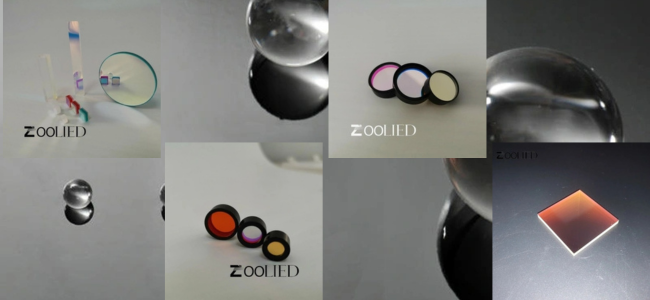
Aspherical lenses: These are available in glass (the mainstream option) and plastic. They are primarily used in LiDAR collimating lenses and automotive camera lenses. Their core functions are to focus and collimate light beams, correct aberrations, and enable high-definition imaging or long-range laser detection. They must meet automotive-grade temperature resistance (-40°C to 150°C) and vibration resistance requirements, with a light transmittance of 95% or higher.
Free-form mirrors: Primarily used in HUD optical modules and in-vehicle projection systems, these mirrors utilise precision grinding and coating processes to ensure accurate light reflection and distortion correction, thereby enhancing display and projection clarity. They offer a field of view of over 120° and a reflectivity of over 99%.
Filters: There is a strong demand for customised solutions, which are broadly divided into two categories: LiDAR-specific filters (designed for 905 nm and 1550 nm laser wavelengths, with a transmittance of over 98% and the ability to block ambient stray light), and infrared filters for in-vehicle cameras (which block visible light whilst precisely transmitting infrared light, enabling imaging in night-time and complex environments).
Optical crystals: Used for polarisation splitting and laser transmission, such as the polarisation-splitting prism (birefringent crystal) in HUDs, which separates polarised light to prevent glare from intense light; optical crystals in LiDAR systems, which assist in the stable transmission of laser signals, with some employing ultra-thin corner-type optical crystals to facilitate the miniaturisation of modules.
 2. Application-specific optical components (for specific in-vehicle optical equipment)
These components are designed for specific applications such as LiDAR, in-vehicle cameras, head-up displays (HUDs) and in-vehicle projectors, and are tailored to meet the unique requirements of each application.
I. Specialised optical components for LiDAR
MEMS scanning mirror: Manufactured using micro-electro-mechanical systems (MEMS) technology, with an angular resolution of 0.01°, a scanning frequency of ≥100 Hz, and capable of 360° environmental scanning; it is a core component enabling wide-range detection in LiDAR systems.
Receiving lens: Used in conjunction with an SPAD chip to focus the reflected laser signal, thereby improving the signal-to-noise ratio and enabling long-range detection (150–600 metres).
High signal-to-noise ratio ultra-light-blocking glass: utilising ‘integrated through-blackening’ technology, surface reflectivity is reduced to 1‰ and stray light absorption reaches 99.9%, thereby resolving stray light interference issues for LiDAR and enhancing detection accuracy in complex road conditions.
II. Optical components specifically designed for in-vehicle cameras
Automotive lens assembly: a combination of multiple aspherical glass and plastic lenses, some featuring a ‘plastic aspherical + glass spherical’ composite design to correct chromatic aberration and control distortion to within 1%. Suitable for various focal lengths (0.8 mm–25 mm) and supporting high-definition imaging at 8 megapixels or higher.
Phase-space light modulator: Used in a new type of ‘computational lens’ to enable independent focusing on different areas of the image, meeting the imaging requirements of dynamic scenes (such as high-speed driving or bumpy roads).
III.Optical components specifically designed for HUDs
Polarising prism: By combining a birefringent crystal with an adhesive layer, it separates polarised light, balancing projected images with ambient light to prevent blurring caused by strong light reflections.
PGU-related optical components: Designed for use with LCOS/LBS technology, these include customised imaging lenses that enhance HUD brightness and resolution, whilst accommodating compact in-vehicle layouts.
As the ‘eyes’ and ‘nerve endings’ of smart vehicles, the technological evolution and industrial implementation of automotive optics directly determine the pace of development in the smart vehicle sector. Driven by both technological innovation and market demand, automotive optics is now facing unprecedented opportunities for growth. From core optical components to system integration, and from perception to interaction, every technological breakthrough is propelling smart vehicles towards greater safety, higher efficiency and a more immersive user experience. In the future, Zoolied Optics will keep pace with the trend towards centralised electronic and electrical architectures, providing core support for the realisation of intelligent mobility spaces.
1. Core optical components (universal for all scenarios / core support)
These components form the cornerstone of automotive optical systems; they are compatible with most automotive optical devices and provide the foundation for the capture, transmission and reflection of light signals.
Aspherical lenses: These are available in glass (the mainstream option) and plastic. They are primarily used in LiDAR collimating lenses and automotive camera lenses. Their core functions are to focus and collimate light beams, correct aberrations, and enable high-definition imaging or long-range laser detection. They must meet automotive-grade temperature resistance (-40°C to 150°C) and vibration resistance requirements, with a light transmittance of 95% or higher.
Free-form mirrors: Primarily used in HUD optical modules and in-vehicle projection systems, these mirrors utilise precision grinding and coating processes to ensure accurate light reflection and distortion correction, thereby enhancing display and projection clarity. They offer a field of view of over 120° and a reflectivity of over 99%.
Filters: There is a strong demand for customised solutions, which are broadly divided into two categories: LiDAR-specific filters (designed for 905 nm and 1550 nm laser wavelengths, with a transmittance of over 98% and the ability to block ambient stray light), and infrared filters for in-vehicle cameras (which block visible light whilst precisely transmitting infrared light, enabling imaging in night-time and complex environments).
Optical crystals: Used for polarisation splitting and laser transmission, such as the polarisation-splitting prism (birefringent crystal) in HUDs, which separates polarised light to prevent glare from intense light; optical crystals in LiDAR systems, which assist in the stable transmission of laser signals, with some employing ultra-thin corner-type optical crystals to facilitate the miniaturisation of modules.
These components are designed for specific applications such as LiDAR, in-vehicle cameras, head-up displays (HUDs) and in-vehicle projectors, and are tailored to meet the unique requirements of each application.
I. Specialised optical components for LiDAR
MEMS scanning mirror: Manufactured using micro-electro-mechanical systems (MEMS) technology, with an angular resolution of 0.01°, a scanning frequency of ≥100 Hz, and capable of 360° environmental scanning; it is a core component enabling wide-range detection in LiDAR systems.
Receiving lens: Used in conjunction with an SPAD chip to focus the reflected laser signal, thereby improving the signal-to-noise ratio and enabling long-range detection (150–600 metres).
High signal-to-noise ratio ultra-light-blocking glass: utilising ‘integrated through-blackening’ technology, surface reflectivity is reduced to 1‰ and stray light absorption reaches 99.9%, thereby resolving stray light interference issues for LiDAR and enhancing detection accuracy in complex road conditions.
II. Optical components specifically designed for in-vehicle cameras
Automotive lens assembly: a combination of multiple aspherical glass and plastic lenses, some featuring a ‘plastic aspherical + glass spherical’ composite design to correct chromatic aberration and control distortion to within 1%. Suitable for various focal lengths (0.8 mm–25 mm) and supporting high-definition imaging at 8 megapixels or higher.
Phase-space light modulator: Used in a new type of ‘computational lens’ to enable independent focusing on different areas of the image, meeting the imaging requirements of dynamic scenes (such as high-speed driving or bumpy roads).
III.Optical components specifically designed for HUDs
Polarising prism: By combining a birefringent crystal with an adhesive layer, it separates polarised light, balancing projected images with ambient light to prevent blurring caused by strong light reflections.
PGU-related optical components: Designed for use with LCOS/LBS technology, these include customised imaging lenses that enhance HUD brightness and resolution, whilst accommodating compact in-vehicle layouts.
As the ‘eyes’ and ‘nerve endings’ of smart vehicles, the technological evolution and industrial implementation of automotive optics directly determine the pace of development in the smart vehicle sector. Driven by both technological innovation and market demand, automotive optics is now facing unprecedented opportunities for growth. From core optical components to system integration, and from perception to interaction, every technological breakthrough is propelling smart vehicles towards greater safety, higher efficiency and a more immersive user experience. In the future, Zoolied Optics will keep pace with the trend towards centralised electronic and electrical architectures, providing core support for the realisation of intelligent mobility spaces.