Chalcogenide Glass or Single-Crystal Silicon? – A Critical Decision for MWIR Thermal Imaging Lens Design
2026-8-4
Single-crystal silicon has long been the go-to choice for 3–5 μm lenses and windows, owing to its mature processing technology and good MWIR transmission. But recently, chalcogenide glass has emerged as a rising competitor. With its distinctive amorphous structure and superior thermal-optical performance, it is fundamentally changing how infrared lens materials are selected.
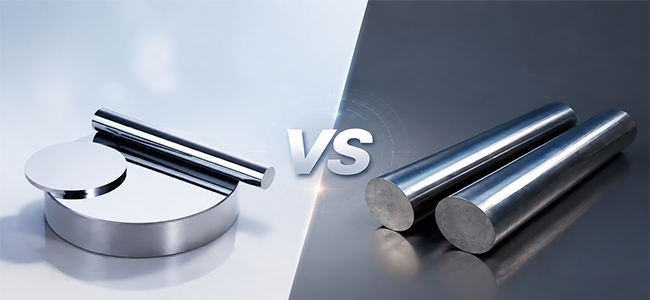
1. Comparison of Basic Material Properties
2. Single-Crystal Silicon: A Mature and Reliable "Engineering Standard"
Single-crystal silicon has been applied in the mid-wave infrared (MWIR) thermal imaging field for decades, and its dominant position is built upon solid engineering advantages.
(1) Optical Performance – Covering the "Golden Window"
The transmission band of single-crystal silicon covers exactly 1.2–7 μm, which closely matches the 3–5 μm MWIR atmospheric window. Within this band, silicon exhibits exceptionally high transmittance (over 96% after anti-reflection coating), and its refractive index of approximately 3.4 facilitates the design of lenses with smaller curvature to reduce aberrations.
(2) Thermal Properties – High Conductivity, Moderate Thermo-Optic Effect
With a thermal conductivity as high as 149 W/m·K, single-crystal silicon ranks among the best of all infrared optical materials. This enables silicon lenses to rapidly dissipate heat under high-power laser or high-temperature environments, minimizing thermal buildup. However, its thermal-optic coefficient (dn/dT) is approximately 1.5×10⁻⁴ /°C, meaning temperature variations can cause focal drift, which must be compensated for through athermalization design.
(3) Mechanical Strength – Hard and Durable
With a Mohs hardness of 7, silicon lenses are wear-resistant and scratch-resistant, making them well-suited for applications with environmental exposure risks, such as surveillance, security monitoring, and automotive systems. Its excellent chemical stability—with no deliquescence—ensures low maintenance costs.
(4) Engineering Challenge – The "Ceiling" of Fabrication Efficiency
The Achilles' heel of single-crystal silicon lies in its fabrication. As a crystalline material, it is difficult to form via precision molding in large volumes; instead, it relies primarily on single-point diamond turning (SPDT) for piece-by-piece machining. For aspheric and diffractive surfaces, SPDT becomes costly and inefficient—particularly unsuitable for high-volume production. This directly drives up the overall cost of silicon lenses at the mass-production stage.
3. Chalcogenide Glass: The "Game Changer" Breaking the Conventional Rules
Chalcogenide glass is primarily composed of chalcogen elements (S, Se, Te) and is currently the only amorphous infrared material that is simultaneously transparent across both the 3–5 μm and 8–14 μm atmospheric windows.
(1) Core Advantages – Thermal Stability and the "Amorphous" Dividend
Low Thermo-Optic Coefficient – A Natural Advantage for Athermalization
The dn/dT of chalcogenide glass is approximately one-eighth that of single-crystal germanium and significantly lower than that of single-crystal silicon as well. This means that over a given temperature range, the focal drift of chalcogenide glass lenses is far smaller than that of silicon lenses. For thermal imaging systems that must operate over a wide temperature range of –40°C to +60°C—such as automotive night vision and handheld outdoor devices—chalcogenide glass is an ideal choice for athermalized designs, reducing the need for complex mechanical compensation mechanisms.
Precision Molding – A "Cost-Cutting Enabler" for High-Volume Production
Due to its amorphous nature, chalcogenide glass can be batch-fabricated via precision molding—just like conventional optical glass. In a single molding step, aspheric or even diffractive surfaces can be produced, achieving surface figure accuracy with PV values below 0.4 μm—comparable to single-point diamond turning (SPDT), yet with an efficiency improvement of several times to tens of times. This is of enormous significance for high-volume civilian applications, where throughput and consistency directly determine cost, and cost ultimately determines market access.
Compositionally Tunable – Greater Design Freedom
The refractive index and Abbe number of chalcogenide glass can be continuously varied by adjusting the elemental ratios. This allows optical designers to correct chromatic aberrations—much like they would with visible-light lens design—by pairing different chalcogenide glass grades to achieve superior imaging performance.
(2) Engineering Limitations – Hardness and Environmental Durability
The "softness" of chalcogenide glass is a challenge that must be addressed in practical engineering applications. Its low hardness and poor scratch resistance can pose risks in scenarios where no protective window is used. However, by applying hard anti-reflection coatings such as diamond-like carbon (DLC), the weathering resistance and abrasion resistance of chalcogenide glass have been greatly improved, enabling its use in relatively harsh environments.
4. Engineering Application Selection Guide
Scenario 1: High-Volume, Cost-Sensitive Civilian Thermal Imaging Products
Recommendation: Chalcogenide Glass
Civilian products such as automotive night vision, security surveillance cameras, and handheld thermal imagers often have annual demands reaching tens to hundreds of thousands of units. The combination of chalcogenide glass with precision molding can simultaneously meet the requirements for complex surface profiles (aspheric/diffractive), batch-to-batch consistency, and low-cost production. Additionally, the low dn/dT advantage helps simplify athermalization design and reduce the number of mechanical components.
Scenario 2: High-Performance, Long-Lifespan Industrial Premium Systems
Recommendation: Single-Crystal Silicon or Hybrid Solution
For systems that must withstand high-power lasers, extreme temperature shocks, or harsh sand and dust environments, the mechanical strength and thermal conductivity advantages of single-crystal silicon are irreplaceable. A hybrid design combining "silicon substrates with chalcogenide glass compensation elements" can also be adopted to balance performance and athermalization requirements.
Scenario 3: Optical Systems Required to Cover Both MWIR and LWIR Dual-Band
Recommendation: Chalcogenide Glass
Chalcogenide glass inherently covers the entire 1–14 μm range, making it capable of serving both MWIR and LWIR detectors within the same system, thereby reducing the variety of materials required.
Scenario 4: R&D, Small-Batch, High-Precision Systems
Recommendation: Depends on Specific Requirements
Single-crystal silicon is a mature material with comprehensive and reliable optical constant data, resulting in lower design risk. For chalcogenide glass, batch-to-batch stability (δn < 1×10⁻³) should be confirmed with the supplier, and for small-batch production, the amortized tooling cost for precision molding dies can be relatively high.
5. Practical Recommendations
Ask three questions before making your material selection: What is the annual volume? Is an aspheric surface truly necessary? How wide is the operating temperature range?
Coating for chalcogenide glass is a "must-have," not an "option." Uncoated chalcogenide glass transmits only about 60% and its surface lacks abrasion resistance. The combination of high-performance anti-reflection coatings with DLC hard films is the standard configuration for practical engineering applications.
The molding die is the core technological barrier. The advantage of chalcogenide glass molding lies in high-volume production—but die design, temperature field control, and demolding processes directly affect surface figure accuracy and die lifespan. Deep collaboration with an experienced molding supplier is more important than simply purchasing the material itself.
Conclusion:
Single-crystal silicon and chalcogenide glass are not in a "one replaces the other" relationship—rather, they coexist in complementary roles, each occupying its own niche. The wisdom of engineering material selection lies in finding the optimal solution for each project based on the four-dimensional coordinates: production volume, environment, cost, and performance.
Today, as infrared thermal imaging accelerates its march toward mass-market adoption, the two defining characteristics of chalcogenide glass—moldability and low thermal drift—are opening up unprecedented possibilities for optical designers.
1. Comparison of Basic Material Properties
|
Parameter |
Single-Crystal Silicon (Si) |
Chalcogenide Glass (ChG) |
|
Transmission Range |
1.2–7 μm |
1–14 μm (covers both MWIR and LWIR) |
|
Material Form |
Crystalline |
Amorphous Glass |
|
Refractive Index (@4 μm) |
~3.4 |
2.5–3.0 (compositionally tunable) |
|
Thermal-Optic Coefficient (dn/dT) |
~1.5×10⁻⁴ /°C |
~0.5×10⁻⁴ /°C (approx. 1/3 that of Si) |
|
Thermal Conductivity |
149 W/m·K (excellent heat dissipation) |
Relatively low |
|
Mohs Hardness |
~7 (high hardness, wear-resistant) |
Relatively low (softer material) |
|
Density |
2.33 g/cm³ |
Varies by composition, typically 4–5 g/cm³ |
|
Fabrication Methods |
Single-point diamond turning (SPDT), grinding & polishing |
Precision molding, single-point diamond turning (SPDT) |
|
Cost Level |
Moderate material cost, high fabrication cost |
Higher material cost, low cost for volume production |
2. Single-Crystal Silicon: A Mature and Reliable "Engineering Standard"
Single-crystal silicon has been applied in the mid-wave infrared (MWIR) thermal imaging field for decades, and its dominant position is built upon solid engineering advantages.
(1) Optical Performance – Covering the "Golden Window"
The transmission band of single-crystal silicon covers exactly 1.2–7 μm, which closely matches the 3–5 μm MWIR atmospheric window. Within this band, silicon exhibits exceptionally high transmittance (over 96% after anti-reflection coating), and its refractive index of approximately 3.4 facilitates the design of lenses with smaller curvature to reduce aberrations.
(2) Thermal Properties – High Conductivity, Moderate Thermo-Optic Effect
With a thermal conductivity as high as 149 W/m·K, single-crystal silicon ranks among the best of all infrared optical materials. This enables silicon lenses to rapidly dissipate heat under high-power laser or high-temperature environments, minimizing thermal buildup. However, its thermal-optic coefficient (dn/dT) is approximately 1.5×10⁻⁴ /°C, meaning temperature variations can cause focal drift, which must be compensated for through athermalization design.
(3) Mechanical Strength – Hard and Durable
With a Mohs hardness of 7, silicon lenses are wear-resistant and scratch-resistant, making them well-suited for applications with environmental exposure risks, such as surveillance, security monitoring, and automotive systems. Its excellent chemical stability—with no deliquescence—ensures low maintenance costs.
(4) Engineering Challenge – The "Ceiling" of Fabrication Efficiency
The Achilles' heel of single-crystal silicon lies in its fabrication. As a crystalline material, it is difficult to form via precision molding in large volumes; instead, it relies primarily on single-point diamond turning (SPDT) for piece-by-piece machining. For aspheric and diffractive surfaces, SPDT becomes costly and inefficient—particularly unsuitable for high-volume production. This directly drives up the overall cost of silicon lenses at the mass-production stage.
3. Chalcogenide Glass: The "Game Changer" Breaking the Conventional Rules
Chalcogenide glass is primarily composed of chalcogen elements (S, Se, Te) and is currently the only amorphous infrared material that is simultaneously transparent across both the 3–5 μm and 8–14 μm atmospheric windows.
(1) Core Advantages – Thermal Stability and the "Amorphous" Dividend
Low Thermo-Optic Coefficient – A Natural Advantage for Athermalization
The dn/dT of chalcogenide glass is approximately one-eighth that of single-crystal germanium and significantly lower than that of single-crystal silicon as well. This means that over a given temperature range, the focal drift of chalcogenide glass lenses is far smaller than that of silicon lenses. For thermal imaging systems that must operate over a wide temperature range of –40°C to +60°C—such as automotive night vision and handheld outdoor devices—chalcogenide glass is an ideal choice for athermalized designs, reducing the need for complex mechanical compensation mechanisms.
Precision Molding – A "Cost-Cutting Enabler" for High-Volume Production
Due to its amorphous nature, chalcogenide glass can be batch-fabricated via precision molding—just like conventional optical glass. In a single molding step, aspheric or even diffractive surfaces can be produced, achieving surface figure accuracy with PV values below 0.4 μm—comparable to single-point diamond turning (SPDT), yet with an efficiency improvement of several times to tens of times. This is of enormous significance for high-volume civilian applications, where throughput and consistency directly determine cost, and cost ultimately determines market access.
Compositionally Tunable – Greater Design Freedom
The refractive index and Abbe number of chalcogenide glass can be continuously varied by adjusting the elemental ratios. This allows optical designers to correct chromatic aberrations—much like they would with visible-light lens design—by pairing different chalcogenide glass grades to achieve superior imaging performance.
(2) Engineering Limitations – Hardness and Environmental Durability
The "softness" of chalcogenide glass is a challenge that must be addressed in practical engineering applications. Its low hardness and poor scratch resistance can pose risks in scenarios where no protective window is used. However, by applying hard anti-reflection coatings such as diamond-like carbon (DLC), the weathering resistance and abrasion resistance of chalcogenide glass have been greatly improved, enabling its use in relatively harsh environments.
4. Engineering Application Selection Guide
Scenario 1: High-Volume, Cost-Sensitive Civilian Thermal Imaging Products
Recommendation: Chalcogenide Glass
Civilian products such as automotive night vision, security surveillance cameras, and handheld thermal imagers often have annual demands reaching tens to hundreds of thousands of units. The combination of chalcogenide glass with precision molding can simultaneously meet the requirements for complex surface profiles (aspheric/diffractive), batch-to-batch consistency, and low-cost production. Additionally, the low dn/dT advantage helps simplify athermalization design and reduce the number of mechanical components.
Scenario 2: High-Performance, Long-Lifespan Industrial Premium Systems
Recommendation: Single-Crystal Silicon or Hybrid Solution
For systems that must withstand high-power lasers, extreme temperature shocks, or harsh sand and dust environments, the mechanical strength and thermal conductivity advantages of single-crystal silicon are irreplaceable. A hybrid design combining "silicon substrates with chalcogenide glass compensation elements" can also be adopted to balance performance and athermalization requirements.
Scenario 3: Optical Systems Required to Cover Both MWIR and LWIR Dual-Band
Recommendation: Chalcogenide Glass
Chalcogenide glass inherently covers the entire 1–14 μm range, making it capable of serving both MWIR and LWIR detectors within the same system, thereby reducing the variety of materials required.
Scenario 4: R&D, Small-Batch, High-Precision Systems
Recommendation: Depends on Specific Requirements
Single-crystal silicon is a mature material with comprehensive and reliable optical constant data, resulting in lower design risk. For chalcogenide glass, batch-to-batch stability (δn < 1×10⁻³) should be confirmed with the supplier, and for small-batch production, the amortized tooling cost for precision molding dies can be relatively high.
5. Practical Recommendations
Ask three questions before making your material selection: What is the annual volume? Is an aspheric surface truly necessary? How wide is the operating temperature range?
Coating for chalcogenide glass is a "must-have," not an "option." Uncoated chalcogenide glass transmits only about 60% and its surface lacks abrasion resistance. The combination of high-performance anti-reflection coatings with DLC hard films is the standard configuration for practical engineering applications.
The molding die is the core technological barrier. The advantage of chalcogenide glass molding lies in high-volume production—but die design, temperature field control, and demolding processes directly affect surface figure accuracy and die lifespan. Deep collaboration with an experienced molding supplier is more important than simply purchasing the material itself.
Conclusion:
Single-crystal silicon and chalcogenide glass are not in a "one replaces the other" relationship—rather, they coexist in complementary roles, each occupying its own niche. The wisdom of engineering material selection lies in finding the optimal solution for each project based on the four-dimensional coordinates: production volume, environment, cost, and performance.
Today, as infrared thermal imaging accelerates its march toward mass-market adoption, the two defining characteristics of chalcogenide glass—moldability and low thermal drift—are opening up unprecedented possibilities for optical designers.