Analysis of Infrared Material Properties
2026-4-22
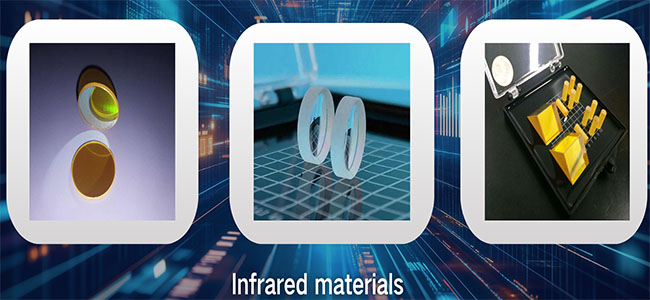
As a core component of infrared optical systems, the performance of infrared materials directly determines the stability and accuracy of infrared detection, imaging, and signal transmission. They serve as the key medium for achieving efficient transmission of mid- and long-wave infrared signals and meeting the demands of applications in extreme environments.
I. Performance Dimensions of Infrared Materials
The performance evaluation of infrared materials must focus on three core objectives: “compatibility with the infrared spectrum, stable signal transmission, and suitability for extreme operating conditions.” The key performance metrics primarily include the following four aspects, which also serve as the primary criteria for distinguishing between superior and inferior materials:
1. Transmittance: This is the most critical performance metric for infrared materials. It refers to the material’s ability to transmit specific infrared wavelength bands (typically 3–5 μm for mid-wave and 8–14 μm for long-wave) and directly determines the efficiency of infrared signal transmission. High-quality infrared materials must have a transmittance of ≥85% and no significant absorption peaks to ensure minimal signal loss. The presence of impurities or bubbles within the material will reduce transmittance and impair signal transmission.
2. Refractive Index and Dispersion Characteristics: The refractive index directly affects the propagation path of infrared light and imaging accuracy; there are significant differences in the refractive indices of various infrared materials (e.g., chalcogenide glasses have a refractive index of 2.0–2.5). Dispersion characteristics determine a material’s ability to control chromatic aberration; low-dispersion materials can reduce imaging errors and are suitable for high-precision infrared systems.
3. Thermal Stability: Infrared materials must be capable of operating over a wide temperature range (–40°C to 80°C), and their temperature coefficient directly affects operational stability. High-quality infrared materials (such as chalcogenide glasses) enable passive thermal compensation designs, allowing them to maintain stable performance under extreme temperatures without the need for additional mechanical compensation.
4. Mechanical and Environmental Adaptability: This includes the material’s hardness, impact resistance, moisture resistance, and ability to withstand extreme environments (high temperatures, high humidity, and intense radiation), which directly determine the material’s service life and suitability for specific applications.
II. Factors Affecting Core Performance
1. Material Composition and Purity: These are key factors affecting performance. High-purity raw materials (such as chalcogenide glasses) can prevent absorption losses caused by impurities and improve transmittance; conversely, additives in the material (such as antimony) can affect refractive index and thermal stability.
2. Manufacturing Processes: Precision melting and forming processes directly affect the uniformity and stability of the material. For example, improper melting and cooling processes for chalcogenide glasses can lead to internal stress, which in turn affects the uniformity of transmittance and refractive index; the crystallization process for crystalline infrared materials (such as ZnSe) affects their impact resistance and temperature resistance.
3. Environmental and Operating Conditions: Temperature fluctuations can affect a material’s refractive index and transmittance, while humidity can cause oxidation and aging of the material’s surface. Additionally, environments with high levels of radiation can accelerate material degradation. Therefore, infrared materials must possess excellent resistance to aging and corrosion to meet the requirements of various applications.
III. Comparison of the Properties of Typical Infrared Materials
IV. Performance Optimization and Application Adaptation
1. Transmittance Optimization: By improving raw material purity and reducing internal impurities, we minimize absorption losses. Additionally, by applying an anti-reflective coating, we reduce surface reflection losses, thereby increasing transmittance to over 85% to meet the demands of high-precision imaging.
2. Stability Optimization: By modifying the material through doping (e.g., adding antimony), the temperature coefficient is reduced, enabling passive thermal compensation and making the material suitable for extreme temperature environments without the need for additional mechanical compensation.
3. Application Selection Principles: For consumer-grade infrared devices, chalcogenide glass is recommended (low cost, easy to process); for high-end precision equipment (such as aerospace and high-end inspection), zinc selenide is recommended to ensure stable performance; for wide-bandwidth applications, calcium fluoride is recommended to achieve full-bandwidth transmission.
V. Summary
The core performance characteristics of infrared materials directly determine the operational quality of infrared systems; their transmittance, refractive index, and thermal stability are the key criteria for selection. High-quality infrared materials must possess the characteristics of “high transmittance, low loss, and stable performance.” Through appropriate material selection and process optimization, these materials can meet the infrared detection and imaging requirements of various applications. In practical applications, selecting the appropriate infrared material based on specific conditions—such as temperature range, accuracy requirements, and cost budget—is essential to ensure the efficient and stable operation of infrared systems.
I. Performance Dimensions of Infrared Materials
The performance evaluation of infrared materials must focus on three core objectives: “compatibility with the infrared spectrum, stable signal transmission, and suitability for extreme operating conditions.” The key performance metrics primarily include the following four aspects, which also serve as the primary criteria for distinguishing between superior and inferior materials:
1. Transmittance: This is the most critical performance metric for infrared materials. It refers to the material’s ability to transmit specific infrared wavelength bands (typically 3–5 μm for mid-wave and 8–14 μm for long-wave) and directly determines the efficiency of infrared signal transmission. High-quality infrared materials must have a transmittance of ≥85% and no significant absorption peaks to ensure minimal signal loss. The presence of impurities or bubbles within the material will reduce transmittance and impair signal transmission.
2. Refractive Index and Dispersion Characteristics: The refractive index directly affects the propagation path of infrared light and imaging accuracy; there are significant differences in the refractive indices of various infrared materials (e.g., chalcogenide glasses have a refractive index of 2.0–2.5). Dispersion characteristics determine a material’s ability to control chromatic aberration; low-dispersion materials can reduce imaging errors and are suitable for high-precision infrared systems.
3. Thermal Stability: Infrared materials must be capable of operating over a wide temperature range (–40°C to 80°C), and their temperature coefficient directly affects operational stability. High-quality infrared materials (such as chalcogenide glasses) enable passive thermal compensation designs, allowing them to maintain stable performance under extreme temperatures without the need for additional mechanical compensation.
4. Mechanical and Environmental Adaptability: This includes the material’s hardness, impact resistance, moisture resistance, and ability to withstand extreme environments (high temperatures, high humidity, and intense radiation), which directly determine the material’s service life and suitability for specific applications.
II. Factors Affecting Core Performance
1. Material Composition and Purity: These are key factors affecting performance. High-purity raw materials (such as chalcogenide glasses) can prevent absorption losses caused by impurities and improve transmittance; conversely, additives in the material (such as antimony) can affect refractive index and thermal stability.
2. Manufacturing Processes: Precision melting and forming processes directly affect the uniformity and stability of the material. For example, improper melting and cooling processes for chalcogenide glasses can lead to internal stress, which in turn affects the uniformity of transmittance and refractive index; the crystallization process for crystalline infrared materials (such as ZnSe) affects their impact resistance and temperature resistance.
3. Environmental and Operating Conditions: Temperature fluctuations can affect a material’s refractive index and transmittance, while humidity can cause oxidation and aging of the material’s surface. Additionally, environments with high levels of radiation can accelerate material degradation. Therefore, infrared materials must possess excellent resistance to aging and corrosion to meet the requirements of various applications.
III. Comparison of the Properties of Typical Infrared Materials
|
Material |
Key Features |
Effective infrared wavelength range |
Applications |
Limitations |
|
Sulfide glass |
Low thermal expansion coefficient, easy to process, and suitable for mass production |
2-12μm |
Consumer infrared, industrial inspection |
Low hardness; requires protection |
|
ZnSe |
Good heat resistance and impact resistance |
1-20μm |
Aerospace, High-End Testing |
Higher costs and complex processing |
|
CaF₂ |
Broad-band transmission, high stability |
0.18-8μm |
High-precision spectral analysis |
Highly brittle and prone to breakage |
IV. Performance Optimization and Application Adaptation
1. Transmittance Optimization: By improving raw material purity and reducing internal impurities, we minimize absorption losses. Additionally, by applying an anti-reflective coating, we reduce surface reflection losses, thereby increasing transmittance to over 85% to meet the demands of high-precision imaging.
2. Stability Optimization: By modifying the material through doping (e.g., adding antimony), the temperature coefficient is reduced, enabling passive thermal compensation and making the material suitable for extreme temperature environments without the need for additional mechanical compensation.
3. Application Selection Principles: For consumer-grade infrared devices, chalcogenide glass is recommended (low cost, easy to process); for high-end precision equipment (such as aerospace and high-end inspection), zinc selenide is recommended to ensure stable performance; for wide-bandwidth applications, calcium fluoride is recommended to achieve full-bandwidth transmission.
V. Summary
The core performance characteristics of infrared materials directly determine the operational quality of infrared systems; their transmittance, refractive index, and thermal stability are the key criteria for selection. High-quality infrared materials must possess the characteristics of “high transmittance, low loss, and stable performance.” Through appropriate material selection and process optimization, these materials can meet the infrared detection and imaging requirements of various applications. In practical applications, selecting the appropriate infrared material based on specific conditions—such as temperature range, accuracy requirements, and cost budget—is essential to ensure the efficient and stable operation of infrared systems.